Our Guide to Sustainable Success
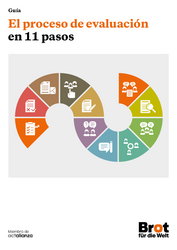
We are committed to continuous learning and improvement to make our projects and funding practices even more effective. Evaluations are our compass: they help us measure success, identify challenges and make optimal use of resources. Through these systematic assessments, we ensure that our support goes where it is most urgently needed – for a more just world.


What Is an Evaluation?
In international cooperation, evaluation is defined as "systematic and objective assessment of a planned, ongoing or completed intervention, its design, implementation and results. The aim is to determine relevance, coherence, effectiveness, efficiency, impact and sustainability. […] An evaluation should provide information that is credible and useful, enabling the incorporation of lessons learned into decision-making processes."
Why Do We Evaluate?
At Brot für die Welt, evaluations pursue two main objectives:
- Firstly, we want to enable learning and improvement by involving various actors at all levels. The insights gained from this enhance the quality of our work.
- Secondly, evaluations provide transparency and accountability by showing how we use funds and what positive changes we achieve.
When selecting evaluators, Brot für die Welt’s most important criteria are their regional, sectoral and methodological competence as well as their independence. In addition, they must respect the human rights and dignity of all persons involved (ethical data collection practice) and apply a participatory approach in their evaluation work. In all evaluations, the key issues of gender and, where possible, inclusion and environmental impacts are taken into account. It is also important to us that evaluation teams are gender mixed and consist of evaluators from the Global North and South.
How Do We Evaluate?
Our evaluations are based on the requirements of the Federal Ministry for Economic Cooperation and Development (BMZ) and established standards from DeGEval and OECD/DAC.
When selecting evaluators, we look for competence, independence and diversity. A participatory approach and compliance with our code of conduct are important to us.. All evaluations take into account the cross-cutting issue of gender and, where possible, the cross-cutting issues of inclusion and environmental impact. We aim for balanced teams from the Global North and South and offer our partner organisations practical support in accompanying evaluations through clearly structured guidelines.
When selecting evaluators, Brot für die Welt’s most important criteria are their regional, sectoral and methodological competence as well as their independence. In addition, they must respect the human rights and dignity of all persons involved (ethical data collection practice) and apply a participatory approach in their evaluation work. In all evaluations, the key issues of gender and, where possible, inclusion and environmental impacts are taken into account. It is also important to us that evaluation teams are gender mixed and consist of evaluators from the Global North and South.
What Types of Evaluation Does Brot für die Welt Carry Out?
In addition to project evaluations, which are mainly commissioned by partner organisations, we also evaluate programmes, funding areas and instruments. At Brot für die Welt, we distinguish between the following types of cross-project evaluations:
- Funding area evaluations are carried out in coordination with the Federal Ministry for Economic Cooperation and Development (BMZ). They assess projects within a thematic area and serve as an instrument for monitoring the success of church development cooperation. Here you can find the anonymised final reports of the funding area evaluations carried out by Brot für die Welt since 2017.
- Cross-sectional evaluations examine several projects on specific issues, often focusing on a particular sector or region, but may also relate to a specific type of measure.
- Corporate strategy evaluations analyse our internal structures and strategies.
- Meta-evaluations review the quality of project evaluations.
All findings and recommendations from the evaluation reports are summarised anonymously. The summaries include key findings and recommendations. Successes are usually described according to OECD/DAC criteria.
How Do We Use the Evaluation Results?
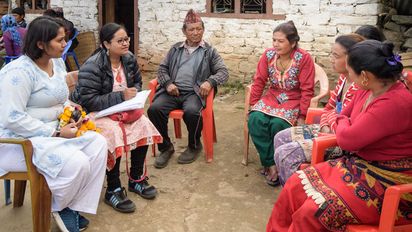
We reflect on and discuss the evaluation results together with partner organisations and target groups to create transparency. We use the recommendations to adapt projects and plan new programmes – in this way, we integrate what we have learned into our work in the long term.
Planned Evaluations
We publish current calls for tenders for planned evaluation projects under current announcements.
Downloads
Donate now Please support us

Hinweis: Die Spendenbeispiele sind symbolisch. Durch Ihre zweckungebundene Spende ermöglichen Sie uns dort zu helfen, wo es am dringendsten ist.
56 € ( Donation example ) For example, a donation of €56 can help fund a hygiene kit for a refugee family.
100 € ( Donation example ) For example, a donation of €100 can provide vegetable seeds for cultivating around 10 fields.
148 € ( Donation example ) For example, a 2,000-litre rainwater tank can be purchased for €148.
Hinweis: Die Spendenbeispiele sind symbolisch. Durch Ihre zweckungebundene Spende ermöglichen Sie uns dort zu helfen, wo es am dringendsten ist.
56 € ( Donation example ) For example, a donation of €56 can help fund a hygiene kit for a refugee family.
100 € ( Donation example ) For example, a donation of €100 can provide vegetable seeds for cultivating around 10 fields.
148 € ( Donation example ) For example, a 2,000-litre rainwater tank can be purchased for €148.