Effects – Experiences – Learning Processes
We consistently gear our activities towards achieving positive effects. We systematically record all effects, make them transparent and use the insights gained to manage projects flexibly, ensure sustainable results and learn from them on an ongoing basis.
What is outcome and impact orientation?
Outcome and impact orientation means consistently focusing our work on a clear goal for change. Comprehensible effect hypothesis form the basis for how we discuss and visualise projects together with project participants during the planning stage and then implement them. To do this, we use intervention logics that depict not only linear effects chains but also complex, multi-causal relationships.
At Brot für die Welt, we distinguish between impacts at different levels:
- Impact refers to intended and unintended, positive and negative changes among various project participants – including target groups, partner organisations and local organisations – and in the project environment to which projects contribute. These overarching impacts lie outside the direct sphere of influence of the projects funded by Brot für die Welt.
- Direct outcomes describe immediate and concrete changes that result directly from project measures in the short or medium term. These changes are measurable and show, for example, how the lives of individuals or a community are directly affected. The direct outcome arises from the use of project outputs, which are often an important intermediate step in reaching the next level, the outcome.
Below the impact levels, our projects are divided into further levels that build on each other and are specifically geared towards achieving the desired effects.
What is a effects chain?
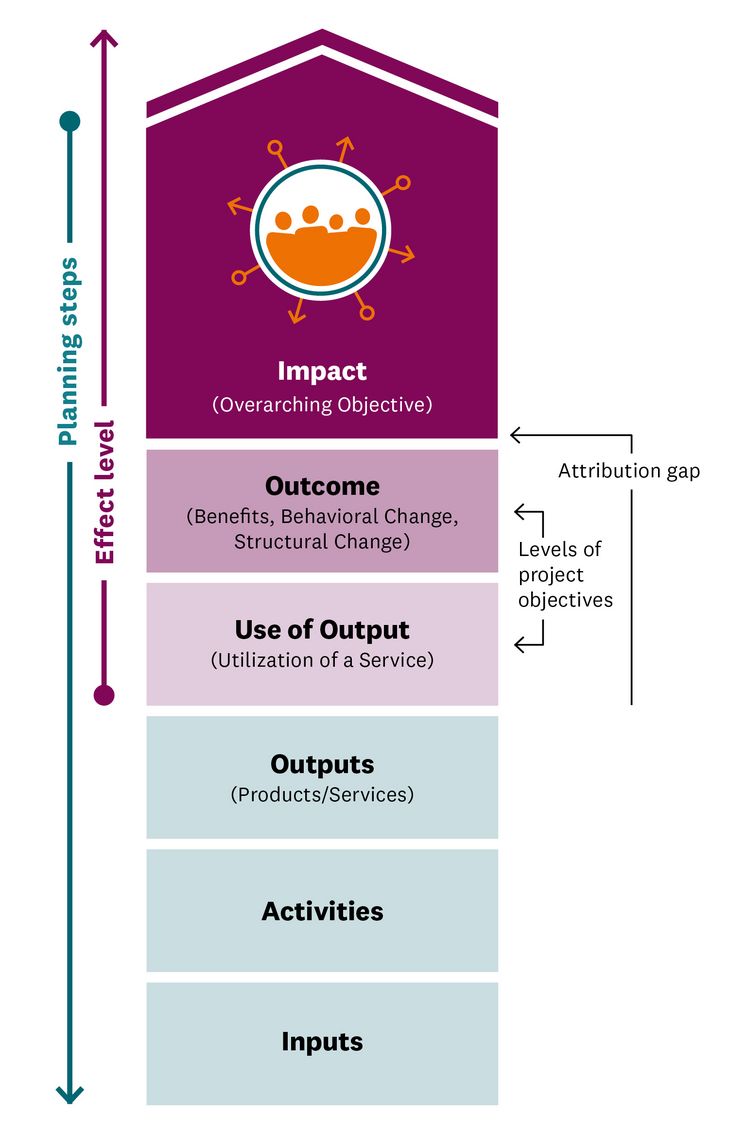
The levels described above can be represented in an effects chain, which describes the logical sequence of steps through which a project is intended to bring about change. It shows how resources (inputs) lead to activities, how these activities result in concrete outputs, and how these ultimately lead to or contribute to the desired effects (use of outputs, outcomes and impacts) among the target groups. In this way, the effects chain makes it possible to understand how and why a project can achieve its objectives.
What are the Objectives and Benefits of Outcome and Impact Orientation?
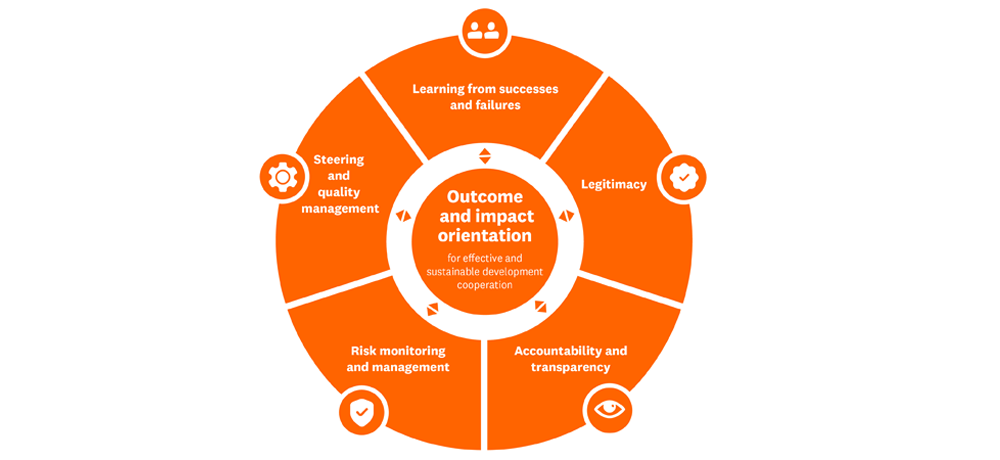
- Steering and quality management
We rely on a clear strategy and regularly review progress using defined indicators. This enables us to manage projects in a targeted manner, use resources effectively and continuously ensure the quality of our work. Outcome and impact orientation makes it possible to align projects and strategies in an evidence-based manner and adapt them flexibly. - Learning from successes and failures in organisations and projects
Joint learning is a key objective. During the project period and also after project completion, we use project monitoring to review how we can improve project measures. Effect hypothesis help us in this regard. Evaluations provide recommendations for improving and further developing projects. We use our findings transparently and communicate them to sponsors and the public. - Increasing legitimacy
By demonstrating our effectiveness and partnership-based cooperation, we strengthen our credibility. Transparent communication promotes trust among funders and target groups. Our work is guided by clear values and supports local civil society. - Accountability and transparency
We openly show what steps we are taking and what effects we are achieving. We report regularly on successes and challenges in impact reports and in our annual report. Compliance and transparency are the basis of our work and ensure the efficient use of funds. - Risk monitoring and management
Risks are identified at an early stage, systematically monitored throughout the course of the project and, if necessary, measures are adjusted. We assess risks during the project approval process and, if necessary, initiate risk minimisation measures.
Donate now Please support us


Hinweis: Die Spendenbeispiele sind symbolisch. Durch Ihre zweckungebundene Spende ermöglichen Sie uns dort zu helfen, wo es am dringendsten ist.
56 € ( Donation example ) For example, a donation of €56 can help fund a hygiene kit for a refugee family.
100 € ( Donation example ) For example, a donation of €100 can provide vegetable seeds for cultivating around 10 fields.
148 € ( Donation example ) For example, a 2,000-litre rainwater tank can be purchased for €148.
Hinweis: Die Spendenbeispiele sind symbolisch. Durch Ihre zweckungebundene Spende ermöglichen Sie uns dort zu helfen, wo es am dringendsten ist.
56 € ( Donation example ) For example, a donation of €56 can help fund a hygiene kit for a refugee family.
100 € ( Donation example ) For example, a donation of €100 can provide vegetable seeds for cultivating around 10 fields.
148 € ( Donation example ) For example, a 2,000-litre rainwater tank can be purchased for €148.